ADA Sidewalk Requirements in Colorado (2026): What Property Owners, HOAs & Businesses Need to Know

Uneven sidewalks are becoming one of the biggest liability and safety concerns for HOAs, apartment complexes, commercial properties, and businesses throughout Colorado.
Across Denver, Westminster, Arvada, Thornton, Aurora, and surrounding Colorado cities, damaged sidewalks are creating:
trip hazards
ADA accessibility concerns
insurance risks
resident complaints
expensive repair costs
Many property owners assume sidewalk cracks and uneven concrete are only cosmetic issues.
In reality, small sidewalk problems often become major structural and liability issues when ignored too long — especially in Colorado’s harsh freeze-thaw climate.
At JL Enterprise, we regularly inspect sidewalks throughout Denver where simple repair issues eventually turned into complete sidewalk replacement projects because the damage continued spreading underneath the surface.
For HOAs and commercial properties especially, proactive sidewalk repair and ADA concrete correction is becoming far more cost-effective than waiting until major failures or liability concerns appear.
What Are ADA Sidewalk Requirements in Colorado?

The Americans with Disabilities Act (ADA) establishes accessibility standards designed to help ensure sidewalks and pedestrian pathways remain safely accessible for individuals with disabilities.
ADA sidewalk compliance requirements generally focus on:
sidewalk accessibility
trip hazards
curb ramps
sidewalk slope
accessible walking routes
wheelchair accessibility
safe surface transitions
For:
HOA communities
apartment complexes
office buildings
retail centers
commercial properties
public-access businesses
maintaining ADA-compliant sidewalks is becoming increasingly important.
What Is Considered an ADA Sidewalk Trip Hazard?
One of the most common ADA sidewalk violations in Colorado is uneven concrete creating trip hazards.
Generally, vertical concrete changes greater than 1/4 inch can become accessibility hazards requiring correction.
These sidewalk problems commonly develop from:
freeze-thaw cycles
soil movement
tree root growth
water erosion
poor drainage
rushed concrete installation
As Colorado temperatures constantly fluctuate, moisture enters small sidewalk cracks, freezes, expands, and slowly forces concrete surfaces apart over time.
This creates:
uneven sidewalks
dangerous walking conditions
wheelchair accessibility problems
liability exposure

throughout many older Colorado properties.
Why Sidewalks Fail So Quickly in Colorado
Colorado weather is extremely hard on concrete sidewalks.
Constant freezing and thawing places heavy stress on:
concrete surfaces
curb ramps
pedestrian pathways
parking lot walkways
Unfortunately, weather alone usually is not the only issue.
Many sidewalks fail prematurely because of:
poor base preparation
weak drainage planning
improper grading
rushed workmanship
low-quality installation
At JL Enterprise, we frequently replace sidewalks that began failing years earlier than properly installed concrete should.
A professionally installed sidewalk should remain durable, level, and structurally stable for many years when built correctly.
Common Sidewalk Problems Found Across Denver & Colorado
Uneven Concrete Panels
Uneven sidewalks are one of the most common sidewalk repair issues throughout Denver and surrounding Colorado cities.
Even relatively minor sidewalk elevation changes can create:
trip hazards
accessibility concerns
safety issues
liability risks
These issues often worsen quickly once water intrusion begins damaging the surrounding concrete.
Standing Water & Drainage Problems
Poor drainage is one of the fastest ways to destroy concrete sidewalks in Colorado.
Standing water accelerates:
cracking
sinking concrete
soil erosion
freeze-thaw damage
sidewalk movement
Drainage issues also significantly increase long-term maintenance costs for HOAs and commercial properties.

Cracking & Surface Deterioration
Widespread sidewalk cracking often indicates deeper structural problems underneath the concrete.
This may include:
unstable soil
erosion
failed subgrade preparation
water intrusion
improper installation
Repeated patchwork repairs often fail because the actual structural issue was never corrected properly.
Why HOAs & Commercial Properties Face Higher Liability Risks
For HOAs, apartment complexes, retail centers, and commercial properties, damaged sidewalks create more than visual problems.
They create:
liability exposure
injury risks
insurance concerns
accessibility complaints
resident frustration
negative customer impressions
A neglected sidewalk reflects poorly on the entire property.
That’s why many HOAs and commercial property owners throughout Denver are proactively replacing sidewalks before severe deterioration and expensive liability problems occur.
Why Cheap Sidewalk Repairs Often Fail
One of the biggest mistakes property owners make is hiring based only on the cheapest estimate.
Cheap sidewalk repairs often fail quickly because they ignore:
drainage correction
base instability
soil movement
long-term structural issues
Temporary patch repairs may appear cheaper initially, but recurring repairs often become far more expensive over time.
Professional sidewalk replacement focuses on solving the underlying structural problem instead of temporarily hiding visible damage.
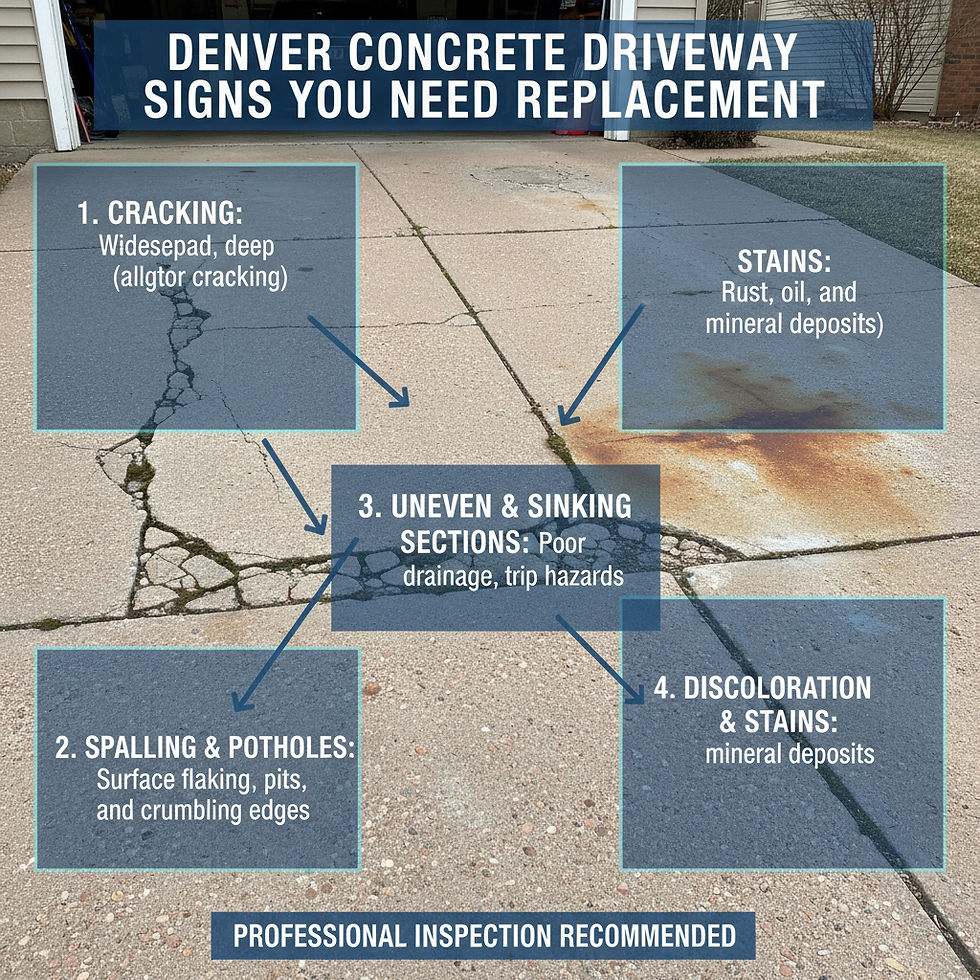
Signs Your Sidewalk May Need Professional Repair
You should have your sidewalks professionally evaluated if you notice:
uneven sidewalk panels
visible trip hazards
sinking concrete
standing water
large cracks
deteriorating curb ramps
recurring sidewalk movement
Addressing these problems early often reduces long-term repair costs significantly.
Why Colorado Property Owners Choose JL Enterprise
At JL Enterprise, we focus on:
faster response times
reliable scheduling
constant communication
honest pricing
professional workmanship
long-term durability
high-end concrete finishes
We understand that HOAs and commercial property owners need contractors who:
communicate clearly
show up reliably
complete projects professionally
understand long-term concrete durability
With over 20 years of experience, JL Enterprise provides:
sidewalk replacement
sidewalk repair
ADA concrete correction
curb ramp installation
HOA concrete services
commercial concrete services
parking lot concrete repair
throughout:
Denver
Westminster
Arvada
Thornton
Aurora
Lakewood
surrounding Colorado areas
Frequently Asked Questions
What is considered an ADA sidewalk trip hazard?
Vertical concrete changes greater than approximately 1/4 inch may become accessibility hazards requiring correction.
Why do sidewalks sink in Colorado?
Common causes include freeze-thaw cycles, poor drainage, erosion, soil movement, and improper original installation.
What causes sidewalks to crack so quickly?
Water intrusion, poor installation, Colorado weather, drainage issues, and weak base preparation are some of the most common causes.
Are damaged sidewalks a liability risk?
Yes. Uneven sidewalks and trip hazards can increase liability exposure for HOAs, businesses, and commercial properties.
Is replacing sidewalks better than repeated repairs?
In many cases, widespread cracking and structural movement make replacement the better long-term investment.
Need Sidewalk Repair or ADA Concrete Services in Denver?
If your sidewalks are cracking, sinking, uneven, or creating accessibility concerns, now is the best time to address the issue before repair costs and liability risks increase.
JL Enterprise provides professional sidewalk replacement, ADA concrete correction, HOA concrete services, commercial concrete repair, and sidewalk installation throughout Denver and surrounding Colorado cities.
Free Estimates Available
Call or Text Jesse Luna720-979-3758
JL Enterprise Chasing Perfection


Comments