Parking Lot Resurfacing in Denver, Thornton & Arvada: 7 Warning Signs (Before It Costs You $20,000 More)
Commercial parking lots across Denver, Thornton, and Arvada endure significant stress from freeze-thaw cycles, snow removal equipment, de-icing chemicals, and high-altitude UV exposure. Over time, small surface defects evolve into structural failures.
If you manage a retail center, apartment complex, office property, industrial facility, or HOA, recognizing early resurfacing indicators can prevent unnecessary capital expenditure.
Below are the seven most common signs your commercial parking lot requires resurfacing — not patchwork repairs.

1. Widespread Alligator Cracking (Fatigue Cracking)
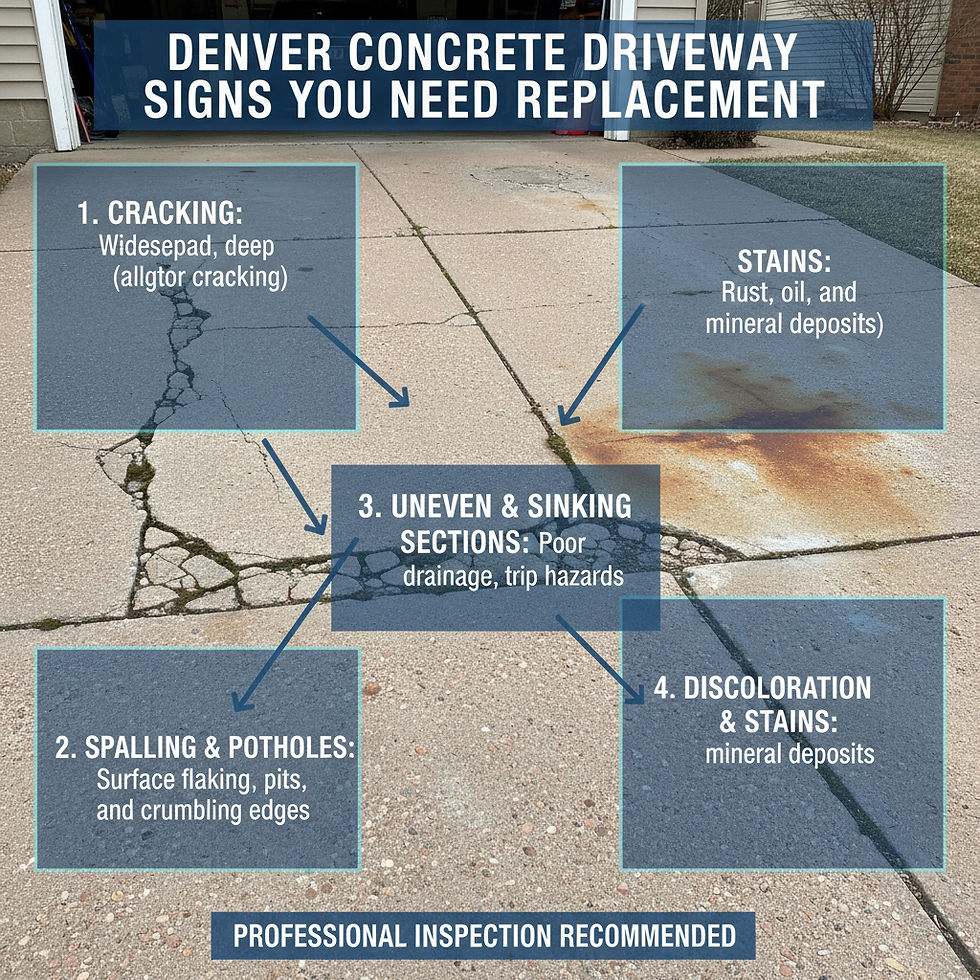
Alligator cracking appears as interconnected fractures resembling reptile skin. It typically forms in high-traffic drive lanes and loading zones.
Cause:
Repeated load stress
Oxidized binder
Sub-base weakening
If confined to the surface layer, asphalt overlay resurfacing may restore integrity. If the base layer has failed, full-depth reconstruction becomes necessary.
Early intervention determines cost outcome.

2. Standing Water After Rain or Snowmelt
Pooling water indicates improper drainage or sub-base settlement.
In Denver and Thornton, water infiltration combined with winter freezing accelerates structural deterioration.
Persistent puddles suggest:
Grade failure
Surface depressions
Compromised base
Resurfacing corrects slope and restores drainage flow before base erosion spreads.

3. Expanding Potholes
Potholes are not cosmetic defects. They represent advanced deterioration.
Risks include:
Vehicle damage claims
Trip-and-fall liability
ADA compliance issues
Negative tenant perception
If potholes recur across multiple areas, resurfacing is typically more cost-effective than ongoing patching.
4. Oxidation and Surface Raveling
High UV exposure in Colorado accelerates oxidation.
Indicators:
Asphalt turns gray
Surface becomes brittle
Aggregate loosens
Increased cracking frequency
Sealcoating may temporarily slow deterioration, but advanced oxidation often requires resurfacing to restore structural resilience.
5. Edge Failure Along Curbs and Entrances
Edges endure significant stress from turning vehicles and snowplows.
If cracking extends inward beyond 12–18 inches, the structural lifespan is limited.
Overlay resurfacing restores edge stability and prevents further spread.
6. Patchwork Repairs Across the Surface
Repeated patch repairs signal systemic deterioration.
A resurfaced parking lot:
Provides uniform load distribution
Improves drainage
Enhances visual presentation
Extends lifespan 10–15 years
At scale, resurfacing reduces long-term maintenance cost.
7. The Lot Is 12–20 Years Old
In Denver metro conditions, commercial asphalt lifespan typically falls within:
Maintenance Level | Expected Lifespan |
Proactive maintenance | 18–20 years |
Minimal maintenance | 12–15 years |
Neglected | Under 12 years |
If multiple symptoms are present within this age range, resurfacing evaluation is recommended.
Resurfacing vs. Full Replacement: Cost Comparison in Denver Metro
Typical commercial asphalt pricing:
Overlay resurfacing: $4–$6 per sq ft
Full-depth replacement: $8–$12 per sq ft
Example (25,000 sq ft property in Arvada):
Resurfacing: $100,000–$150,000
Replacement: $200,000–$300,000
Delaying resurfacing can double capital expense.
Why Parking Lots Deteriorate Faster in Denver, Thornton & Arvada
Environmental stressors include:
Freeze-thaw cycling
De-icing chemicals
Snowplow abrasion
Heavy commercial traffic
High-altitude UV exposure
Preventative resurfacing protects structural integrity and property value.
Commercial Parking Lot Resurfacing Services in Denver, Thornton, Arvada & Surrounding Areas
JL Enterprise provides:
Commercial asphalt resurfacing
Parking lot repair
Crack sealing
Pothole repair
Sealcoating
ADA-compliant striping
Service areas include :Denver, Thornton, Arvada, Westminster, Lakewood, Centennial, and surrounding metro communities.
Phone: 720-979-3758Email: jlunaenterprise@gmail.com
Schedule a site evaluation before surface deterioration becomes structural failure.
FAQ – Parking Lot Resurfacing in Denver Metro
How long does asphalt resurfacing last in Colorado? Typically 10–15 years with proper maintenance.
When is resurfacing not recommended? If the base layer has failed or drainage is severely compromised, full reconstruction may be required.
What is the best time of year to resurface in Denver? Late spring through early fall when temperatures support proper asphalt compaction.
How long does a commercial resurfacing project take? Most projects range from 1–5 days depending on size and traffic coordination.


Comments