Top 7 Signs Your Concrete Is Failing (Most Homeowners Miss #4)
Concrete is often treated as “set it and forget it.” Once it’s poured, most homeowners assume it will last forever. In reality—especially in Denver and across Colorado’s Front Range—concrete is constantly under stress from temperature swings, soil movement, and moisture.
The problem is not that concrete fails. The problem is that most people don’t recognize the warning signs until the damage is no longer minor.
Below are the 7 most common signs your concrete is failing, including one that almost

everyone overlooks—and by the time they notice it, the repair is no longer simple.
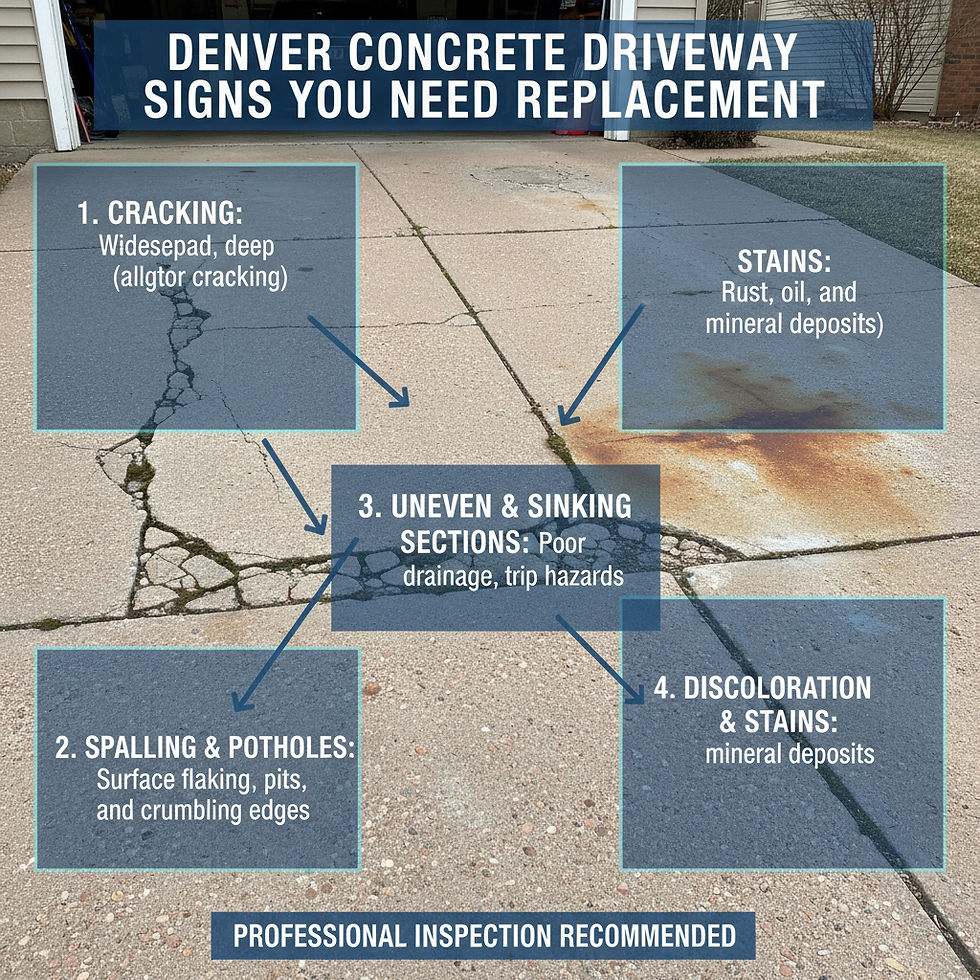
1. Visible Cracks That Are Growing Over Time
Hairline cracks are common. However, cracks that widen, lengthen, or branch are a red flag.
In Colorado’s freeze-thaw climate, moisture seeps into cracks, freezes, expands, and forces the concrete apart from the inside. What begins as a cosmetic issue can turn into structural failure in just a few seasons.
Pay attention if:
Cracks are wider than a credit card
New cracks appear each winter
Multiple cracks intersect or “spider” outward
Cracking is often the first signal—but not the most dangerous one.
2. Uneven or Sunken Sections (Settlement)
If one section of your driveway, sidewalk, or patio sits lower than another, this usually means the ground beneath the concrete has shifted or compacted unevenly.
This is extremely common in Denver due to:
Expansive clay soils
Poor drainage
Improper base preparation during installation
Settlement issues are not just aesthetic—they create trip hazards, drainage problems, and accelerate further cracking.

3. Pooling Water or Drainage Problems
Concrete should shed water, not trap it.
If you notice water pooling on flat surfaces or flowing toward foundations instead of away from them, this indicates:
Improper slope
Warping from settlement
Structural deformation over time
Standing water accelerates surface erosion, worsens freeze-thaw damage, and can even affect nearby structures.
4. Surface Flaking or Chipping (Spalling) — The One Most People Miss
This is the most commonly overlooked sign—and the most misunderstood.
Spalling looks like:
Peeling or flaking at the surface
Small chips breaking away
Rough, pitted textures forming over time
Many homeowners assume this is “normal wear.” It’s not.
Spalling usually means the concrete’s surface layer is failing due to:
Moisture penetration
Freeze-thaw cycles
Improper finishing or curing
Deicing salts reacting with the concrete
Once spalling starts, the protective surface is compromised—and deterioration accelerates rapidly from there.
5. Exposed Aggregate or Reinforcement
If you can see stones, rebar, or wire mesh through the surface, the concrete has moved past early-stage failure.
At this point:
Structural integrity is compromised
Moisture intrusion increases exponentially
Repairs become more involved if ignored
This is especially critical for sidewalks, steps, and commercial walkways, where safety and liability are concerns.
6. Crumbling Edges and Corners
Edges and corners take the most abuse—from foot traffic, vehicles, snow shovels, and temperature extremes.
When these areas begin to:
Break away
Collapse under pressure
Look jagged or uneven
…it typically indicates internal weakness rather than surface damage.
Edge failure is a sign the concrete is losing cohesion.

7. Repairs That Keep Failing
If concrete has been patched before and the same problems keep returning, that’s a sign the root issue was never addressed.
Temporary fixes applied to structural problems do not last—especially in Colorado’s climate. Recurring failure usually means:
Base issues
Drainage problems
Widespread material fatigue
At this stage, repeated patching often does more harm than good.
Why This Matters in Denver Specifically
Colorado’s environment is one of the harshest for concrete in the country. Daily temperature swings, freeze-thaw cycles, and expansive soils all work against long-term durability.
Concrete that might survive decades elsewhere can deteriorate far faster here if early warning signs are ignored.
What to Do If You Notice One or More of These Signs
The most important step is not guessing.
Some issues can be stabilized early. Others require more involved solutions. The difference often comes down to timing.
At JL Enterprise, we evaluate concrete with a focus on:
Structural integrity
Safety
Longevity in Colorado conditions
If something can be repaired properly, we’ll tell you.If it can’t, we’ll explain why—clearly and honestly.
Schedule a Professional Concrete Evaluation
If you’re seeing any of the signs above—or even if you’re unsure—getting a professional assessment early can prevent unnecessary damage, safety risks, and future headaches.
JL Enterprise provides concrete repair and replacement services throughout Denver and surrounding Front Range communities.
Contact us today to schedule an on-site evaluation and get clarity on what your concrete actually needs.


Comments