Why Does Concrete Crack? 9 Common Causes Every Colorado Homeowner Should Know
Concrete is one of the strongest and most durable construction materials available, but even the best concrete can develop cracks over time. Whether it's your driveway, sidewalk, patio, garage floor, or parking lot, cracks can appear for several different reasons. While some are completely normal, others may indicate underlying structural issues that require professional attention.
If you've noticed cracks in your concrete, understanding what caused them is the first step toward protecting your investment. Below are the nine most common reasons concrete cracks and what you can do to prevent future damage.

1. Freeze-Thaw Cycles
Colorado's climate is especially tough on concrete. Water seeps into small pores and hairline cracks, and when temperatures drop below freezing, that water expands. Repeated freezing and thawing creates pressure inside the concrete, causing cracks to grow larger over time.
Proper drainage and sealing existing cracks before winter can significantly reduce freeze-thaw damage.
2. Poor Soil Preparation
A concrete slab is only as strong as the foundation beneath it. If the soil isn't properly compacted before the concrete is poured, it can settle over time. As the ground shifts, the concrete loses support and begins to crack.
Professional site preparation is one of the most important steps in ensuring a long-lasting concrete installation.
3. Heavy Loads
Not all concrete is designed to support the same amount of weight. Driveways and parking lots that regularly support heavy trucks, RVs, dumpsters, or commercial equipment can develop stress cracks if the slab wasn't built for those loads.
Using the proper concrete thickness and reinforcement helps prevent premature cracking.

4. Tree Roots
Tree roots naturally seek moisture and can grow beneath sidewalks, driveways, and patios. As the roots expand, they lift sections of concrete, creating uneven surfaces and large cracks.
Planting large trees too close to concrete surfaces often leads to expensive repairs later.
5. Poor Drainage
Standing water is one of concrete's biggest enemies. Water that pools around a slab gradually weakens the soil underneath and increases freeze-thaw damage during colder months. Over time, this causes settling, erosion, and cracking.
Proper grading and drainage help protect concrete for years to come.
6. Natural Shrinkage
Concrete naturally shrinks as it cures. Without properly placed control joints, the stress created during curing can result in random cracks across the surface.
Control joints don't stop concrete from cracking—they help control where it cracks, creating a cleaner and more predictable appearance.
7. Improper Installation
Even high-quality concrete can fail if it's installed incorrectly. Common mistakes include poor base preparation, improper concrete mix, finishing the surface too early, inadequate curing, or pouring during unfavorable weather conditions.
Experienced contractors follow proven installation methods that greatly reduce the risk of premature cracking.
8. Age and Everyday Wear
Concrete is incredibly durable, but it isn't indestructible. Years of vehicle traffic, changing temperatures, moisture, UV exposure, and normal wear gradually weaken the surface.
Small hairline cracks are common as concrete ages, but wider cracks or uneven sections should be inspected before they become larger problems.
9. Lack of Maintenance
Many homeowners assume concrete is maintenance-free, but regular inspections and minor repairs can dramatically extend its lifespan. Small cracks should be repaired before water has the opportunity to penetrate the surface and create more serious damage.
Routine maintenance is far less expensive than replacing an entire slab.

Should You Repair or Replace Cracked Concrete?
Not every crack means your concrete needs to be replaced.
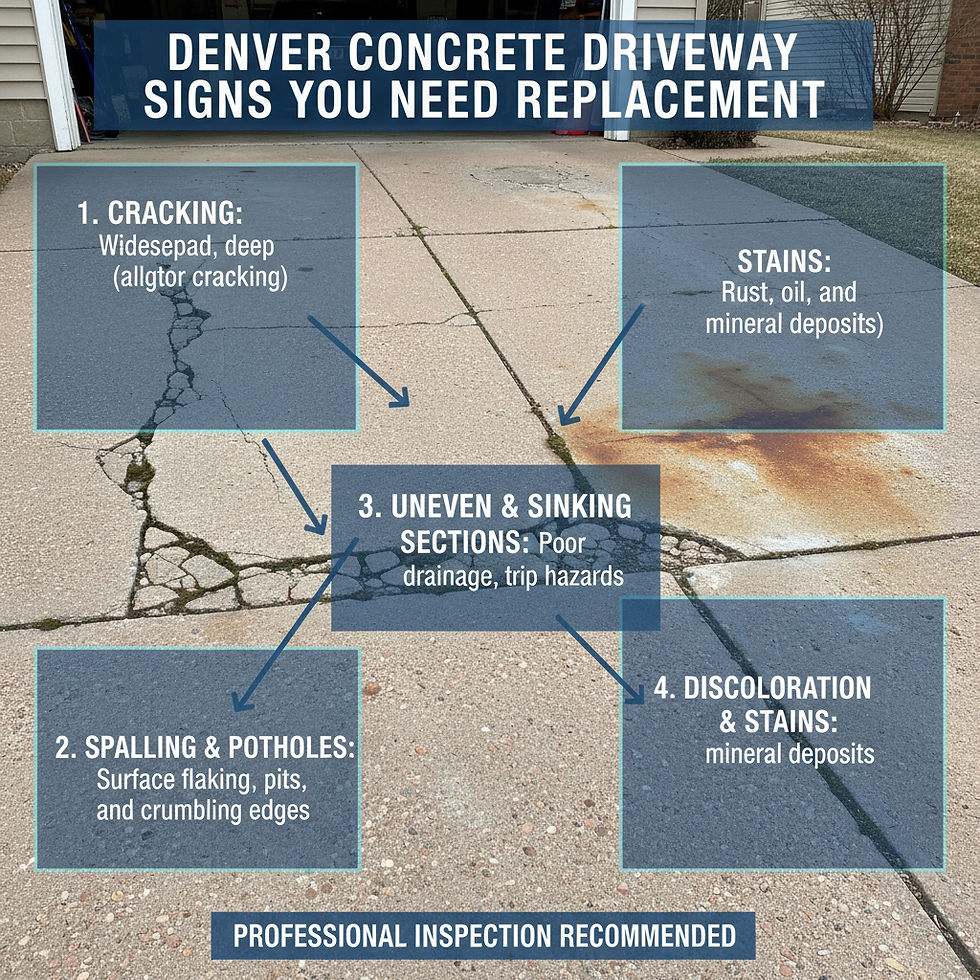
Repair may be the right option if the cracks are narrow, stable, and the concrete remains level. However, replacement is often the better long-term solution when the concrete is sinking, heaving, severely cracked, or showing signs of foundation failure.
A professional inspection can determine the most cost-effective solution for your property.
Trust JL Enterprise for Professional Concrete Services
At JL Enterprise, we provide professional concrete installation, repair, and replacement throughout the Denver metro area. Whether you need a new driveway, sidewalk, patio, garage floor, or commercial flatwork, our team is committed to delivering durable workmanship built to withstand Colorado's demanding climate.
If you've noticed cracks in your concrete, don't wait until the damage becomes more extensive. Contact JL Enterprise today for a free estimate and let our experienced team help restore the safety, appearance, and value of your property.


처음 접했을 때는 복잡할 것 같았지만 실제로는 상품권소액결제 이용 과정이 간단해서 쉽게 사용할 수 있었습니다. 사용자 친화적인 점이 인상적이었습니다.
편리성과 만족도를 모두 갖춘 관리 서비스라고 생각합니다. 깔끔한 환경과 전문적인 진행이 마음에 들었고 성남출장마사지 이용 후 몸의 무거움이 줄어드는 효과를 느꼈습니다.
이용 과정이 간단하고 업무 설명이 명확해서 부담 없이 시작할 수노래방알바 관련 후기도 많아 참고하기 좋았고 실제 근무 환경도 설명과 비슷해 만족스러운 경험이었습니다.